What we are building
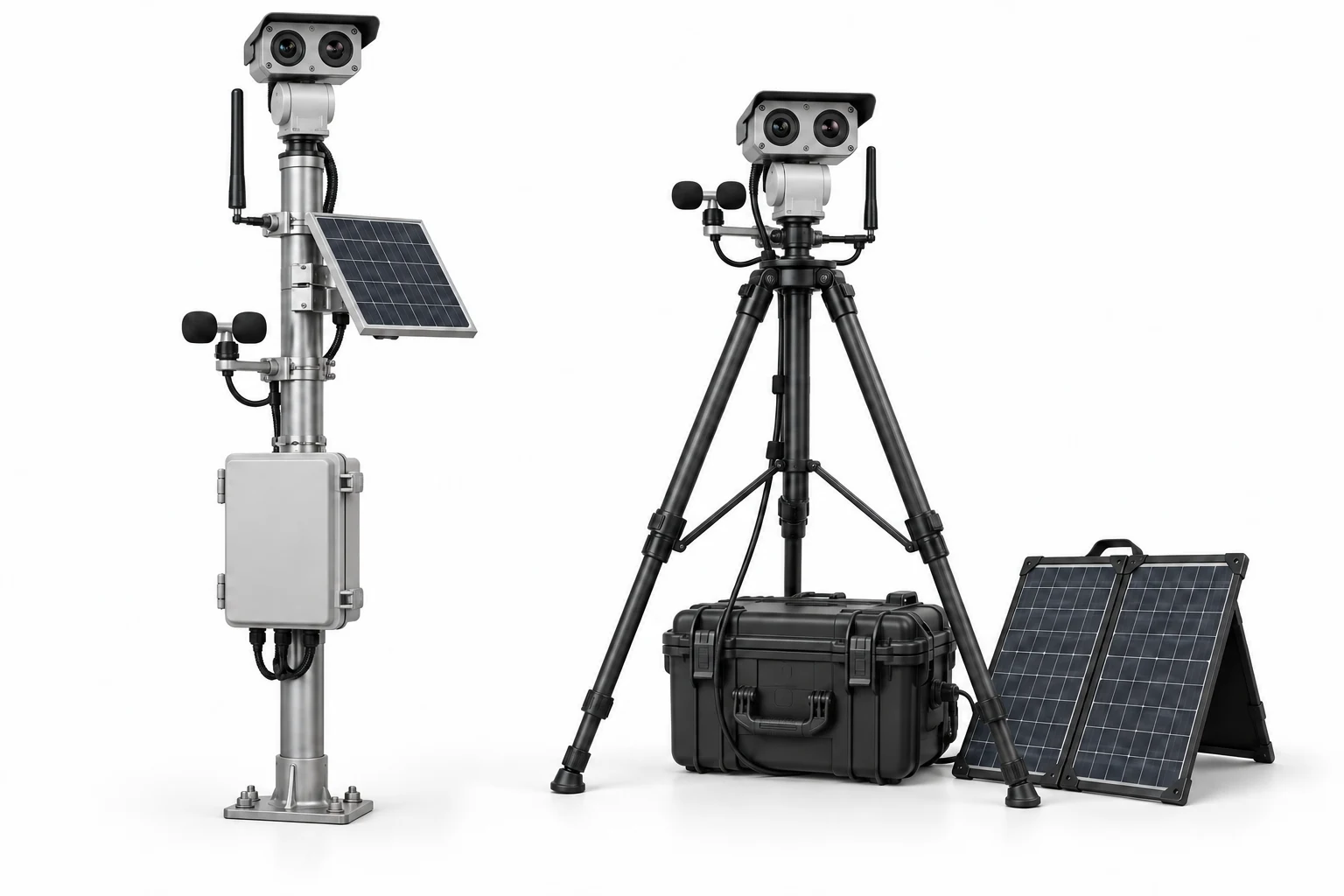
We are developing the Drone Wall to distribute sensing across many stations. The aim is to keep each station inexpensive enough to deploy in quantity, maintain locally and replace when it fails or is lost.
We are investigating complementary sensing methods: radio-frequency detection, acoustic sensing, and visible and near-infrared cameras. A network would combine observations from its stations into a view that an operator can use to assess drone activity.
Communications could use existing public networks where available or a local mesh where appropriate. The choice depends on the deployment and the data involved: transmitting short alerts is a different problem from carrying video.
What needs to be measured
Development is underway. The next milestones are an integrated demonstration and field measurements. These need to establish detection performance, false-alarm rates and network operation in representative conditions, alongside the cost of building and operating the stations.
- Which drone activity the sensors detect, which events they miss, how quickly they report it and how often they raise false alarms.
- How terrain, weather and background activity affect coverage.
- How stations share observations, and what remains available when a link or a station is lost.
- The power, installation and maintenance needed to keep a network operating, and the workload involved in assessing its alerts.
From a trial site to an entire border
We are seeking a partner with a defined perimeter and a drone-detection requirement to help establish trial conditions and success criteria. Alongside that work, we want to speak with border authorities about the scale of deployment they would need. Border length alone cannot tell us how many stations to build: useful coverage also depends on the terrain, the required detection performance and access to power and communications.
A planning study would use measurements from a representative trial to estimate the number of stations and the cost of installing and operating them. It should also account for replacement units, maintenance visits and the people receiving the alerts.
| Decision | Information needed |
|---|---|
| How many stations? | Area to cover, tested coverage in relevant conditions, overlap and redundancy requirements. |
| What would it cost? | Station hardware, site preparation, installation, power, network connections, operator time, maintenance and replacements. |
| Who would operate it? | Alert-handling responsibilities, existing monitoring systems and maintenance arrangements. |
| How would it be expanded? | Measured trial results, manufacturing capacity and a staged installation plan. |
Help define the requirements for a trial
We are looking for partners who can define a real perimeter requirement and help evaluate the system. An initial requirements discussion would cover the site, the activity to detect, existing equipment and how success would be assessed. It would establish what development and preparation are needed before an on-site trial.
Contact the Drone Wall team